
Sixth joint presentation – 19 May 2026
Towards Truth current themes
The Hon. Justice Phillip Boulten, Supreme Court of NSW and Ngara Yura Committee member, introduced panellists Anna Harding (Project Director of Towards Truth), Jonathan Hunyor (CEO of the Justice and Equity Centre), Shane Phillips (CEO Tribal Warrior) and Kate Sinclair (Solicitor, Strategic Litigation, Justice and Equity Centre).
Towards Truth is a partnership between the Indigenous Law Centre and the Justice and Equity Centre (formerly the Public Interest Advocacy Centre). The project is researching the vast body of laws and policies that have impacted First Nations people since 1788, broken down into four main ‘themes’ – Country, Kinship, Law and Culture, and People. The presenters focussed on the current subjects: contemporary policing and criminal offences, and the present work on historical policing.
Fifth joint presentation – 3 June 2025
Exploring the Towards Truth research project
Her Honour Judge Sarah Hopkins (Ngara Yura Committee) facilitated the presentation and introduced the presenters: Jonathon Hunyor (CEO of the Justice and Equity Centre) and Elizabeth Clark (Research Manager with the Towards Truth Project). Towards Truth is a partnership between the Indigenous Law Centre and the Justice and Equity Centre (formerly the Public Interest Advocacy Centre). The project is researching the vast body of laws and policies that have impacted First Nations people since 1788, broken down into four main ‘themes’ – Country, Kinship, Law and Culture, and People.
Fourth joint presentation – 5 November 2024
The history and personalities of the District Court’s Walama List
A panel discussion exploring the history and personalities of the District Court’s Walama List. The List, commenced as a pilot in February 2022, provides a therapeutic and holistic approach to the sentencing of eligible Aboriginal and Torres Strait Islanders. The programme for the presentation has links to more information about the List.
The Hon Justice Dina Yehia, chair of the Ngara Yura Committee of the Judicial Commission, introduced panellists Edwina Crawford (Director, Aboriginal Services Unit); her Honour Judge Sarah Hopkins (List Judge); Elder Aunty Marcia Ella-Duncan OAM; psychologist Vanessa Edwige and two practitioners in the list, Emma Hudson-Buhagiar (Senior Solicitor, Walama team, ALS) and Anthony Brookman (Senior Solicitor, Walama List, Office of the DPP NSW).
2022 Joint Presentation
2022 joint presentation for the Ngara Yura Committee of the Judicial Commission of NSW and the Francis Forbes Society for Australian Legal History on Thursday 10 November 2022 at 5.15 pm – in Court 1, Federal Court of Australia, Level 21 Law Courts Building, Queens Square, 184 Phillip St Sydney
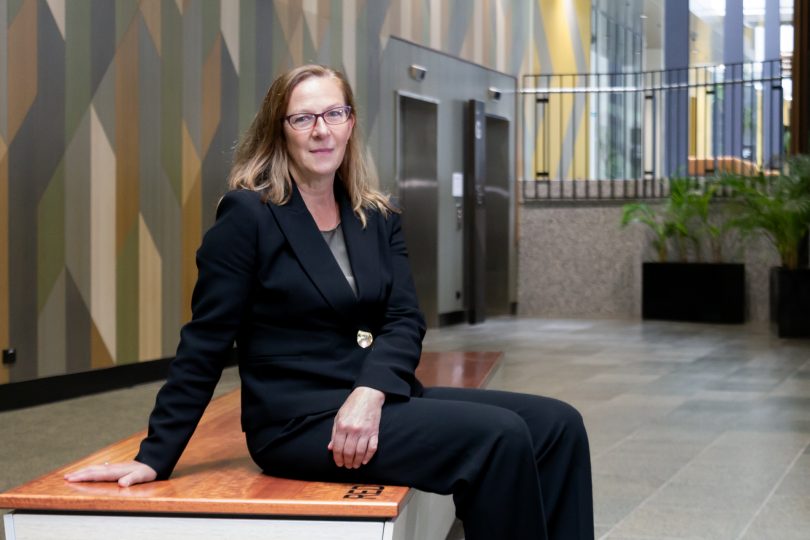
The third annual joint presentation was delivered by the Hon Lucy McCallum, Chief Justice of the ACT Supreme Court, titled “The fallacy of protectionism.” The paper addressed the historical background to the so-called “protectionist” policies of the last century, their abject failure in achieving their stated goals of protecting First Nations peoples and the reckoning to be done to avoid such mistakes in the future.
The presentation was chaired by the Hon Justice Rachel Pepper, a member of the Ngara Yura Committee.
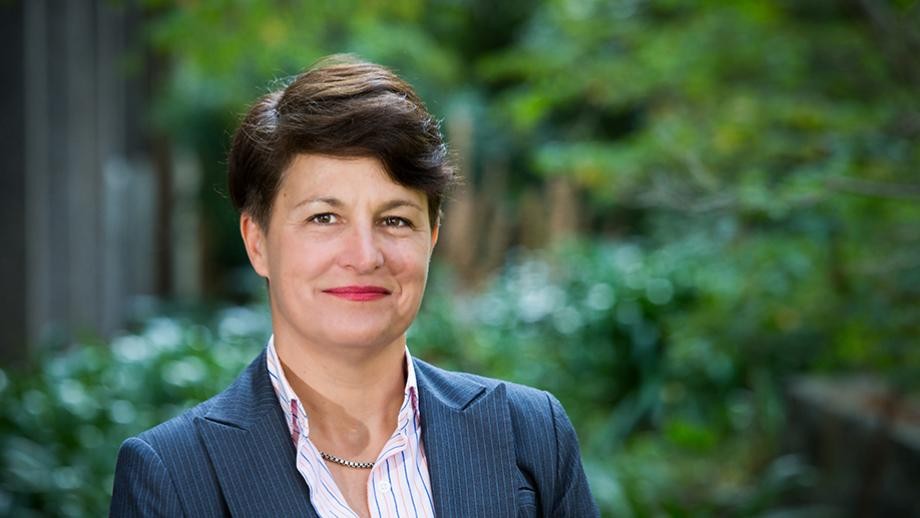
The Ngara Yura Committee and the Forbes Society are grateful to the Hon James Allsop AO, Chief Justice, Federal Court of Australia, President of the Forbes Society and Ngara Yura Committee member, for use of Federal Court facilities for the presentation.
Second Joint Presentation – 2021
The second annual joint presentation was a panel discussion on 4 November 2021 – ‘Making the Past Visible: The Legacies of the Protectionist Legislation’ delivered by Richard Weston, inaugural Deputy Children’s Guardian for Aboriginal Children and Young People in NSW together with members of Kinchela Boys Home Aboriginal Corporation; chaired by Chief Justice Allsop

“Making the Past Visible: The Colonial Frontier Massacre Map Project and the Legacies of Frontier massacres”
The first joint presentation between the Francis Forbes Society and the Ngara Yura Committee of the NSW Judicial Commission was a webinar delivered on Thursday 5 November 2020 at 5:15 pm entitled:
Making the Past Visible: the Colonial Frontier Map Project and the Legacies of Frontier Massacres
The speaker was Professor Lyndall Ryan of the University of Newcastle. The webinar was chaired by Chief Justice Allsop of the Federal Court of Australia and Justice McCallum from the Supreme Court of New South Wales.
Professor Ryan addressed the history of massacres of Aboriginal people that occurred from 1794 to 1928 (some 300, with an estimated loss of nearly 10,000 lives) across the Australian frontier. The lecture examined the data concerning these events and addressed important historical and contemporary questions about this part of Australian history and legal history: the lack of awareness of these events; why few perpetrators appeared before courts; how do we come to terms with this past and what the past and our response mean for the future?

